Expressive singing as a baseline
Apply word stress, steady beat, slur, and phrase direction from the first reading. Connect expressive choices to behaviors singers can hear and demonstrate.
Teaching & Clinics
Teach expressive singing from the beginning. Give singers clear tasks, useful feedback, and skills they can carry into the next piece.
Plan a clinicThe approach
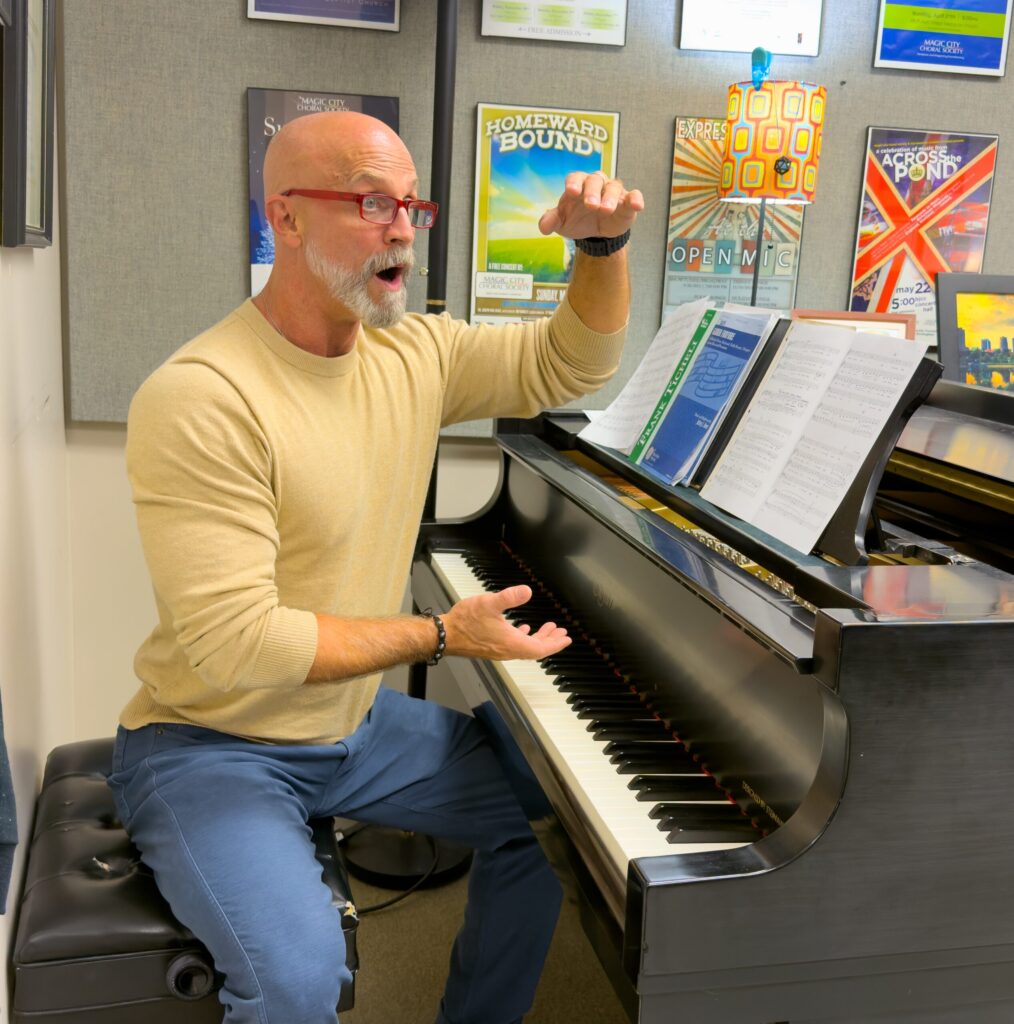
Musical learning becomes more useful when singers know what they are doing, can hear the difference, and can repeat the behavior independently.
Paul’s work draws on a practical teaching sequence: pinpoint a musical behavior, provide instruction, perform, assess, and give feedback. Binary contrast helps singers hear and demonstrate a difference before applying it in the score.
Teaching for transfer asks singers to use the same skill across changing repertoire and musical situations. For future educators, it also connects their own rehearsal experience to the teaching decisions they will make with their students.
Professional development
Clear instruction.
Specific feedback.
Audible change.
Ways to work together
Sessions can be shaped around your ensemble, repertoire, and teaching priorities.
Plan a clinicApply word stress, steady beat, slur, and phrase direction from the first reading. Connect expressive choices to behaviors singers can hear and demonstrate.
Beautiful gestures can lose their meaning when they become habitual. Identify movements that have become your baseline, then choose gestures in response to the music and the sound you want from the choir.
Set a clear musical target, design a focused repetition, and give specific feedback. Build a rehearsal that connects each task to the desired performance.
Connect breath, legato, resonance, registration, and diction to the demands of the repertoire. Use warm-ups to prepare the skills the rehearsal will need.
Help singers recognize and apply a learned skill when the piece, text, or musical context changes. Develop independence alongside performance.
Connect gesture, rehearsal planning, teacher language, and feedback. Prepare emerging conductors to lead with musical clarity and responsibility.
Clinics, guest conducting, and conversations about teaching.